So, you’ve realized that having a closet full of clothes doesn’t necessarily mean you have something to wear. Most people start their style journey by buying whatever looks good on a mannequin, only to find those pieces don’t work together at home.
In 2026, looking “put-together” in India isn’t about expensive brands or flashy logos. It’s about understanding a few simple “cheat codes” that make dressing up effortless. If you’re a “blank slate” beginner, here are the seven rules to help you master your daily look.
List of 7 basic styling rules for beginners:
1. Prioritize “Breathable” over “Beautiful”
In the Indian climate, your comfort is your style. You can wear the most expensive suit in the world, but if you’re sweating through it, you won’t look stylish.
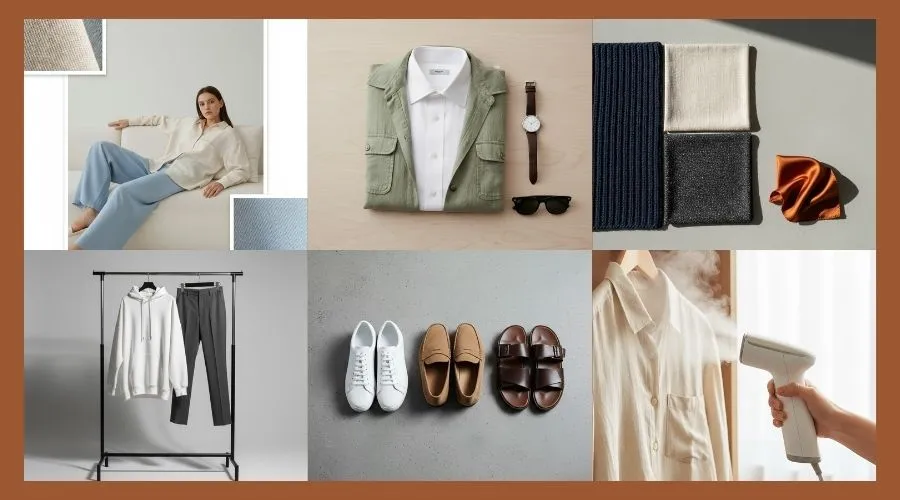
One of the first basic styling rules is to check the fabric tag. Avoid heavy synthetics and polyesters that trap heat. Instead, look for cotton-linen blends or modal. These fabrics have a natural texture that looks high-end and keeps you cool. A slightly wrinkled linen shirt looks intentional and relaxed; a sweaty polyester shirt just looks uncomfortable.
2. Master the “Third Piece” Rule
A t-shirt and jeans are just a basic covering. To turn it into an “outfit,” you need a third piece. This is the secret weapon of stylists.
Since it’s often too hot for jackets in India, your third piece needs to be lightweight. It could be a cool watch, a linen overshirt worn open, a stylish belt, or even a pair of classic sunglasses. This extra layer adds visual interest and tells the world you actually thought about what you’re wearing.
3. Use the “70/30” Color Balance
One of the biggest mistakes beginners make is wearing too many bright colors at once. To look sophisticated, use the 70/30 rule.
Keep 70% of your outfit neutral—think shades like beige, navy, olive, or white. Use the remaining 30% for your “pop” of color. For example, if you’re wearing navy trousers and a white shirt, your shoes or a bag could be a bold tan or a deep forest green. This keeps your look grounded and professional.
4. Balance Your Silhouette
A major trend right now is oversized clothing, but it’s easy to get lost in all that fabric. The rule is simple: Balance. If you are wearing loose, wide-leg trousers, pair them with a more fitted top. If you’re wearing a big, boxy hoodie or an oversized shirt, keep your bottom half more streamlined. Wearing “baggy on baggy” often looks sloppy, while “tight on tight” can feel outdated. Balancing the volume makes your silhouette look intentional.
5. Invest in “The Big Three” Footwear
You don’t need twenty pairs of shoes. A beginner only needs three specific types to cover almost every situation in India:
- Clean White Sneakers: Not gym shoes, but minimal leather or canvas sneakers. They work with everything from jeans to casual suits.
- Tan Loafers or Mojaris: Perfect for when you need to level up from a sneaker but aren’t ready for a formal shoe.
- Versatile Sandals: Quality leather sandals (not rubber flip-flops) are essential for the Indian summer and casual traditional events.
6. The “Tailor-Made” Secret
The difference between a ₹500 shirt and a ₹5,000 shirt is often just the fit. Most clothes bought off the rack are made to fit “everyone,” which means they fit “no one” perfectly. This is another one of many basic styling rules one should master.
Find a local tailor and build a relationship with them. Having your trousers hemmed to the right length (just touching the top of your shoes) or having the shirt’s waist tucked in slightly can transform your look. A cheap item that fits perfectly will always look more expensive than a luxury item that is too long or too baggy.
7. Mind the Details (Maintenance)
The final rule is the easiest but most ignored: Maintenance. Even the best outfit is ruined by wrinkles, lint, or scuffed shoes. Invest in a basic handheld steamer; it’s faster than an iron and works wonders on cotton and linen. Keep your white sneakers white with a quick wipe-down once a week. When your clothes are crisp and clean, you automatically look like you have your life together.
Conclusion: Your Style is a Skill
Dressing well isn’t a talent you’re born with; it’s a skill you practice. By focusing on quality fabrics, proper fit, and simple color rules, you can stop “just wearing clothes” and start “building a look.” Remember, the goal isn’t to look like a model on a runway, but to feel like the best version of yourself every time you step out the door. Start with these basic styling rules, and your confidence will naturally follow.
FAQs
Q: How do I choose the right color for my skin tone?
A: A quick trick is the “Vein Test.” If your veins look blue, you have cool undertones (wear silver, blues, and pure whites). If they look green, you have warm undertones (wear gold, earth tones, and off-whites).
Q: Can I wear black in the Indian summer?
A: Yes, but only in breathable fabrics like cotton or linen. However, try “Dark Olive” or “Navy” instead; they are just as slimming but look fresher in the 2026 sunlight.
Q: How many basic t-shirts do I actually need?
A: Start with five: two white, one black, one navy, and one grey. This set covers almost every layering scenario for work or weekends.
Q: Are baggy clothes still in style for 2026?
A: Yes, but the trend has evolved. It’s no longer a “messy” baggy; it’s “structured” oversized. If one piece is loose, ensure the rest of the outfit is sharp to maintain the look’s intention.