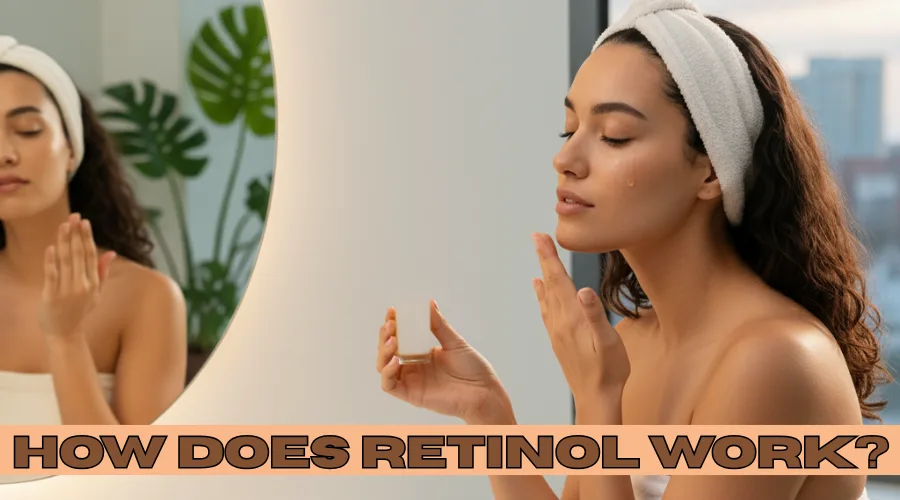
Have you ever asked yourself, How Does Retinol Work? Together, we can uncover why this powerhouse ingredient is so popular in skincare.
Vitamin A in the form of retinol penetrates your skin, promotes cell turnover, and promotes the formation of collagen. Due to this, when you use it regularly, you’ll see changes in your acne, wrinkles, fine lines, and uneven tone.
However, retinol can initially cause dryness, redness, or sensitivity, just like any other powerful substance. By knowing how retinol functions, we can help you gain its advantages while reducing its negative effects, giving your skin a more radiant and healthy look.
What Is Retinol And What Is It Made Of?
A common type of vitamin A in skincare products, retinol has the strong capacity to enhance the appearance and texture of the skin. It is a member of the retinoid family and derived from vitamin A, which your body naturally converts appearance and texture of the to the active form that acts directly on skin cells, retinoic acid. Retinol often appears in serums and creams, where it penetrates the skin to promote the creation of collagen and accelerate cell turnover. In addition to clearing up acne, this procedure helps to balance out skin tone and minimise wrinkles and fine lines. In short, retinol is a vitamin-based ingredient used to renew and repair skin.
What Does Retinol Do For Your Skin?

Retinol helps renew your skin by speeding up cell turnover and boosting collagen production. It smooths fine lines, evens out tone, clears breakouts, and improves overall texture, leaving your skin looking healthier and more radiant. Below, find the detailed explanation of the same.
How Does Retinol Work On The Skin?
Retinol is one of the most powerful components in skincare products because of its various impacts on the skin. It helps to shed dead skin cells and promote healthy, newer ones beneath by boosting cell turnover. Retinol reduces wrinkles and fine lines while increasing elasticity and firmness by promoting the creation of collagen and elastin. By reducing UV damage, black spots, and hyperpigmentation, it also balances out skin tone. Retinol helps clear clogged pores, lessen outbreaks, and stop new spots on skin prone to acne. It may produce dryness or irritation at first, but over time, it brightens the face, reduces the appearance of pores, and refines texture.
Benefits Of Retinol
Regular use of retinol might change your skin by treating multiple issues at once. Your skin becomes smoother, brighter, and more radiant as a result, and it also promotes long-term skin health.
- Reduces fine lines and wrinkles – Retinol stimulates collagen production, helping to smooth existing lines and prevent new ones from forming.
- Even skin tone – It fades dark spots, sun damage, and hyperpigmentation, giving your skin a more uniform appearance.
- Fights acne – By unclogging pores and regulating cell turnover, retinol helps reduce breakouts and prevent future blemishes.
- Improves skin texture – It smooths rough or uneven skin, leaving it softer and more supple to the touch.
- Minimizes pores – Keeps pores clear, reducing their appearance and making skin look more refined.
- Brightens complexion – Promotes a fresh, radiant glow by revealing new, healthy skin cells.
- Supports long-term skin health – Encourages ongoing cellular renewal and strengthens skin resilience over time.
How Long Does It Take Retinol To Work, And How Often Can You Use It?
Although it takes time to see noticeable results, retinol is quite powerful. After using the product consistently for 4 to 6 weeks, you should start to notice changes in the texture and brightness of your skin. Around eight to twelve weeks, fine line, wrinkle, and hyperpigmentation reductions normally become more obvious, although it may take three to six months for acne and general stiffness to noticeably change. Skin type, retinol amount, and application frequency can all affect the duration of effects. Use retinol carefully, beginning two to three times per week and increasing as your skin becomes more accepting. Protecting your skin guarantees greater, longer-lasting effects; therefore, it’s crucial to apply sunscreen every day and introduce retinol gradually.
Retinol Side Effects And Precautions
Despite its many advantages, retinol can have negative side effects, especially if used for the first time. As your skin adapts to the rapid cell turnover, common symptoms include dryness, redness, peeling, and flakiness. Additionally, it can make your skin more sensitive to sunlight and cause slight irritation or itching in some people. The redness and irritation that retinol can cause may be decreased by making minor changes to your skincare regimen. It could be beneficial to:
- Use only one retinol product at a time.
- Use retinol every other day rather than every day.
- Wait 30 minutes after washing your face before applying your retinol product.
- Avoid retinol products if you have a sunburn, broken skin or other skin irritations.
- Use SPF 30 and wear sun protective clothing and hats to reduce your exposure to the sun.
- Ask your healthcare provider about the best time to apply moisturizer as part of your skincare routine.
When To Call The Doctor?
Although retinol often leads to mild skin irritation, you should see a doctor if your skin reacts badly or suddenly. If you get blistering, burning, swelling, or redness that doesn’t go away with moisturising or decrease frequency, consult a doctor. Additionally, you should seek professional advice if you observe extreme peeling, pain, or infection symptoms like pus or oozing. People with rosacea, eczema, or sensitive skin should exercise extra caution. To guarantee that you receive the advantages of retinol without endangering your skin, a dermatologist can suggest the ideal concentration, alternative therapies, or modifications to your regimen.
Can You Combine Retinol With Other Topical Skin Treatments?

Yes, retinol can be used in connection with certain topical therapies; however, attention must be given to prevent irritation. Hyaluronic acid, niacinamide, and moisturisers work well together to calm and hydrate the skin while amplifying the benefits of retinol. It can, however, worsen dryness, redness, or peeling if used together with other strong active ingredients as vitamin C, benzoyl peroxide, or alpha and beta hydroxy acids (AHAs/BHAs). Alternating the usage of different therapies is the best way to safely combine them; for instance, taking vitamin C in the morning and retinol at night. Getting advice from a dermatologist guarantees that your regimen is both delicate and effective.
Common Retinol Treatment Options (Serum, Cream, Lotion)
Retinol comes in different formulations, allowing you to choose one that best fits your skin type and concerns. Scroll through the article to the end and know about it.
- Serums are lightweight and absorb quickly, making them ideal for targeting fine lines, uneven skin tone, and acne without feeling heavy.
- Creams are richer and more hydrating, making them perfect for dry or sensitive skin. They deliver retinol gradually, reducing the risk of irritation while keeping your skin moisturized.
- Lotions provide a balance between serums and creams, offering moderate hydration with effective retinol delivery. They are great for combination skin and for those who want a gentler introduction to retinol in their routine.
Final Thoughts on Retinol for Skin Care
If we want healthier, smoother, and more glowing skin, retinol can be a huge game-changer. It treats several issues at once by brightening your complexion and reducing fine lines, wrinkles, and breakouts. Naturally, patience is essential—results take time, and we may initially experience some dryness or irritation. We may make the procedure much simpler by beginning slowly, applying good moisturiser, and using sunscreen to protect our skin. Retinol can become a vital component in your routine if used appropriately and consistently, giving you the radiant, renewed skin that we all desire.
Also Read: 5 Sore Throat Remedies That Actually Work
FAQ
Q1. What is the best time to apply retinol?
A. Retinol is best applied at night, as sunlight can reduce its effectiveness and increase skin sensitivity.
Q2. Can I use retinol if I have sensitive skin?
A. Yes, but start with a lower concentration and use it 1–2 times a week to build tolerance.
Q3. How long does it take to see results?
A. Improvements in texture and tone may appear in 4–6 weeks, while wrinkles and acne may take 3–6 months.
Q4.Can I use retinol during pregnancy?
A. It’s generally not recommended—consult your doctor for safe alternatives.
Q5. Can I combine retinol with other skincare products?
A. Yes, with gentle moisturizers and niacinamide, but avoid using it with strong acids or benzoyl peroxide at the same time.